

Winter 2026-2027 Forecast: What to Expect and How to Prepare
Since 1818, the Farmers Almanac has offered a glimpse of what each winter could bring. This year’s forecast calls for severe storm tracks in the South, quick cold snaps in the North, and an unpredictable mix of rain and snow across the Northeast. Whatever the season has in store, a little preparation now can go a long way.
- This Year’s Winter Weather Outlook – Dive into the 2026-2027 forecast and see how it compares to last year's outlook.
- Unpredictable Weather, Dependable Service – Learn how Ferrellgas keeps homeowners fueled through winter and beyond, with reliable supply, dedicated delivery teams, and convenient service options.
- Winter Preparation and Safety – A checklist of steps to keep your propane system and home ready for winter.
- Make Every Gallon Count – Discover simple energy-saving tips to stretch your propane usage when temperatures drop.
This Year’s Winter Weather Outlook
According to the Farmers' Almanac, winter 2026-2027 will be a season of contrasts. The Southern region of the U.S. can expect frequent storm systems and heavier-than-normal precipitation, including the possibility of sleet, freezing rain, or heavy wet snow. In the North, overall temperatures should hover closer to normal, but don't expect a completely quiet winter. Fast-moving storm systems, sharp cold snaps, and brief bursts of snow are likely to interrupt milder stretches across the West, Northern Plains, Upper Midwest, and Great Lakes. The Northeast may have it toughest, caught between coastal rain and mixed precipitation, with inland areas facing repeated rounds of heavy, wet snow through January and February.
No long-range forecast is perfect, but the Farmers' Almanac is a useful starting point for planning ahead. If the current outlook holds true, this winter will deviate from the 2025-2026 winter forecast, which called for widespread early cold and heavy snow stretching from the Northern Plains through New England. This year's forecast trades that pattern for a wetter, storm-heavy South while the North stays closer to normal temperatures, aside from periodic cold snaps.
Unpredictable Weather, Dependable Service
As with any weather forecast, the Farmers' Almanac's predictions aren't a guarantee, which is exactly why preparation and a dependable propane provider make such a difference.
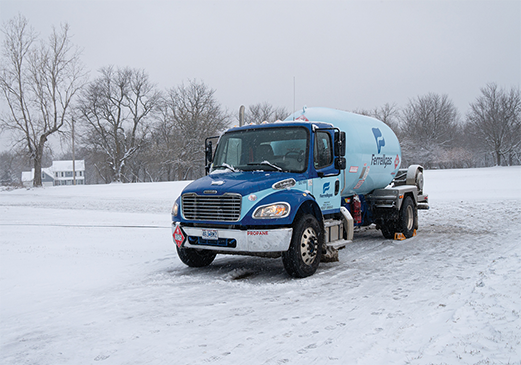
Homeowners count on Ferrellgas for safe, reliable, and professional service, season after season. Our nationwide supply network helps us keep propane moving across the country, so we’re positioned to serve you even when demand peaks. Our local delivery teams work through winter conditions to keep you fueled and comfortable whenever it’s safe to be on the road.
Don't Wait to Order Propane
Customers with Will Call delivery service should keep a close eye on their tank gauge and place an order before propane levels get low. This is especially important during severe weather, as conditions affecting deliveries may be outside our control, and waiting to fill the tank can leave you scrambling if there’s an early cold front. Ordering your propane refill early is a simple way to make life easier.
To place an order, simply text ORDER to 573-207-5975**, log into MyFerrellgas.com, or call 888-337-7355.
Simplify Propane Refill Planning
For homeowners who want fewer to-dos and more peace of mind, our convenient Auto Fill delivery service* is available to qualifying customers. This program uses delivery forecasting technology to automatically schedule propane deliveries based on your usage patterns and local weather conditions. Even better, Auto Fill service can be paired with a digital tank monitor* that allows you to track propane levels in real time.
While Auto Fill customers are not required to inspect their tank percentages prior to each fill, it is still important to check your propane level from time-to-time, especially during periods of unusually high usage, such as adverse weather events.
*Qualification and active credit status are required for Auto Fill delivery service. Availability and cost of digital tank monitors may vary by location.
Winter Preparation and Safety
Winter readiness is about more than staying cozy. It’s also about making sure your propane system can handle everything the season brings — from heating to backup power. A few proactive steps now can help you avoid disruptions later.
- Monitor your tank level closely. Cold weather can cause you to use propane faster than normal. Regularly checking your tank level can help you avoid unexpected runouts and keep you comfortable when the cold arrives.
- Keep the path to your tank clear. Snow, ice, leaves, and fallen branches can block access, so it’s important to clear a 10-foot perimeter around your tank before deliveries. If you live in a heavy snowfall area and have an underground tank, mark its location with a tall flag or pole.
- Secure all pets before your delivery. For everyone’s safety, keep animals indoors or behind a fence on delivery day. Having a plan in place before our Delivery Driver arrives can prevent delays or rescheduling.
- Keep your tank in good working condition. Tank maintenance typically includes routine inspections, cleaning, and necessary repairs. This work should be done by a qualified professional, and some propane suppliers will cover it for customers who lease their tank.
- Store smaller tanks properly. Propane cylinders should always be stored outdoors in an upright position and at least 10 feet away from buildings and combustible materials. Proper ventilation is necessary for safe operation, so never use or store cylinders in enclosed spaces such as basements, garages, sheds, or crawl spaces. If you use Blue Rhino propane exchange cylinders, read and follow the safe-use instructions printed on the sleeve.
- Prepare your propane generator. Make sure your propane generator is fueled and ready for use. Check filters, refill portable cylinders, and test the unit before cold weather arrives. Never operate a portable generator indoors or in a garage, crawl space, or other enclosed area — even with the door open, as the exhaust contains carbon monoxide. Inspections and maintenance should always be performed by qualified professionals.
- Keep vents clear of snow and ice. After a storm, check that your chimney, flue, and appliance vents are clear of snow, ice, and debris. Gently clear what you can safely reach from the ground with a broom — never use a shovel or a sharp tool, and don’t climb onto the roof. Blocked vents can cause dangerous carbon monoxide buildup. If a vent is out of reach or you spot damage, contact a qualified professional. Working carbon monoxide detectors on every level of your home are an important backup.
- Review propane safety guidelines. Know what to do if you smell gas or suspect a leak. If needed and safe to do so, you can shut off the propane supply at your tank by turning the hand wheel clockwise until it stops. In the event your gas is shut off during a storm, do not attempt to turn it back on until a qualified professional confirms it is safe.
Make Every Gallon Count This Winter
When temperatures drop, energy costs tend to rise. With a few easy adjustments, you can get more out of every propane gallon this winter. Use these tips from the U.S. Department of Energy (DOE) to help with energy efficiency:
- Close the fireplace damper when it's not in use. This can help prevent valuable heat from escaping up the chimney.
- Set the temperature on your water heater to 120°F. This is slightly below the manufacturer’s default setting but is still sufficient for everyday use.
- Lower your thermostat 7°–10°F when you are asleep or away. According to the DOE, doing this at least 8 hours per day can save up to 10% a year on heating and cooling. It also helps to avoid large thermostat changes throughout the day. Gradual adjustments help systems operate more smoothly. The sweet spot in winter is around 68°–70°F.
- Insulate hot water pipes. Wrapping the pipes connected to your water heater can help reduce heat loss as water travels to faucets and appliances. The DOE recommends covering at least the first 3 feet of accessible pipes with foam insulation sleeves.
- Use ceiling fans in reverse during winter. According to the DOE, running ceiling fans clockwise on low speed during winter creates a gentle updraft that pulls warm air down from the ceiling and circulates it back into the room. A ceiling fan allows you to raise the thermostat setting by about 4°F without reducing comfort — a simple, low-cost efficiency habit.
- Seal windows and doors to keep warm air in. Plugging gaps around doors, windows, and ducts is one of the most cost-effective ways to reduce demand on your heating system and help every gallon of propane go further. Caulking and weatherstripping are simple DIY options for most homeowners.
Winter can bring plenty of surprises, but Ferrellgas is ready with the reliable propane service you deserve, season after season. Looking for a propane supplier you can count on? Sign up online or call 888-337-7355 during business hours, and a dedicated Customer Service Professional will help get you started.
**By texting ORDER, you agree to receive automated promotional text messages. Message and data rates may apply. Up to 50 messages per month. Reply STOP to unsubscribe or HELP for assistance. Messages are sent via automated systems. Delivery is subject to carrier availability. If you have pay-in-advance terms, you will be asked to pay using a secure link we will send from 573-207-5975.
CATEGORIES
Archives
- Fall 2026
- Summer 2026
- Spring 2026
- Winter 2025
- Fall 2025
- Summer 2025
- Spring 2025
- Winter 2024
- Fall 2024
- Summer 2024
- Spring 2024
- Winter 2023
- Fall 2023
- Summer 2023
- Spring 2023
- Winter 2022
- Fall 2022
- Summer 2022
- Spring 2022
- Winter 2021
- Fall 2021
- Summer 2021
- Spring 2021
- Winter 2020
- Fall 2020
- Summer 2020
- Spring 2020
- Winter 2019
- Fall 2019
- Summer 2019
- Spring 2019
- Winter 2018
- Fall 2018
- Summer 2018
- Spring 2018
- Winter 2017