

3-Day Emergency Kit Checklist: Don’t Forget Propane
Winter storms can knock out power and close roads, sometimes for days at a time. Planning ahead helps you weather the storm with confidence. A 3-day preparedness plan and a well-stocked emergency kit help your household stay safe, warm, and informed until conditions improve. Water, food, and flashlights usually make the list. Propane should, too.
Preparedness has been in the news this month. On November 17, the Federal Emergency Management Agency (FEMA) and the Federal Communications Commission (FCC) ran a nationwide test of the Emergency Alert System. It’s a good reminder to check your own plan before winter weather arrives. The Centers for Disease Control and Prevention (CDC) recommends keeping at least a 3-day supply of water and non-perishable food. Here’s what this guide will walk you through:
- What Is a 3-Day Preparedness Plan: Learn what a 72-hour plan covers.
- Why Propane Belongs in Your Plan: See how an on-site propane supply and backup power fit into a 3-day plan.
- Getting Your Propane Supply Ready: Find out when to order, which delivery option fits, and which detectors to install.
- What to Add to Your Emergency Kit: Use a checklist that adds propane safety items to the basics.
- Using Propane Safely During an Outage: Review steps for clearing snow, using generators, and conserving fuel, plus what to do if you smell gas.
- Frequently Asked Questions: Get quick answers about supply length, grills, heaters, and cylinders.
What Is a 3-Day Preparedness Plan?
A 3-day preparedness plan is a set of supplies and steps that helps your household take care of itself for about 72 hours after an emergency. Many state and local emergency management offices recommend starting with at least a 3-day supply. Ready.gov, the U.S. federal government’s preparedness site, advises keeping enough food, water, and additional supplies to last several days.
Why Should Propane Be Part of Your Emergency Plan?
Propane is stored in a tank right on your property, so your fuel supply is on hand when the power goes out. According to the Propane Education & Research Council (PERC), a propane standby generator connected to your tank can restore power automatically within seconds of an outage. Propane also doesn’t degrade over time when stored properly, providing a long-term fuel option.
Outages are a real risk. The U.S. Energy Information Administration (EIA) reports that the average U.S. electricity customer went without power for about 11 hours in 2024, nearly twice the annual average of the decade before. Major events such as hurricanes accounted for 80% of that time. For a closer look at how propane supports a more reliable energy mix, read Strengthening America’s Energy Backbone: Propane’s Role in Energy Resilience & Grid Reliability.
Thinking about backup power? Our Propane Generators 101: Backup Power Before Winter Storms Hit guide covers what to know before the first storm.
How Do You Get Your Propane Supply Ready Before a Power Outage?
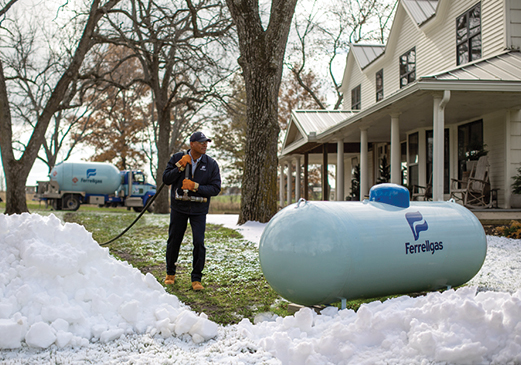
Check your tank gauge and schedule a delivery before a storm arrives, not after. PERC warns that winter storms can last several days and leave roads inaccessible for fuel delivery. Planning ahead helps you stay ready for the season. Learn more in Smart Ways to Manage Your Propane in Winter.
Choose a Delivery Option That Fits Your Plan
With Will Call delivery service, you monitor your gauge and place each order before your tank level reaches 30%, or at least 7 business days before you anticipate needing propane. With Auto Fill delivery service*, we analyze your usage patterns and local weather data to schedule refills for you. Add Digital Tank Monitoring* to check your propane level anytime at MyFerrellgas.com.
Make Your Tank Easy to Find
In heavy snow, mark your tank with a brightly colored flag, pole, or stake that stands taller than the typical snow depth in your area. Keep your driveway, walkway, and the path to your tank clear of snow, ice, and debris so our Delivery Drivers can reach it safely.
Install Propane and Carbon Monoxide Detectors
Install UL-listed propane gas and carbon monoxide detectors on each level of your home. Follow the manufacturer’s instructions and press the test button so everyone in your household knows what each alarm sounds like.
What Belongs in Your Emergency Kit?
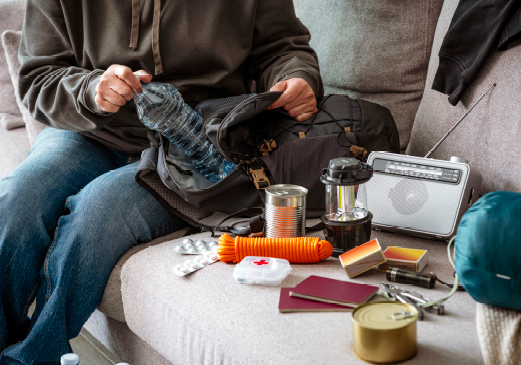
Add a few propane-specific items to your standard kit: a posted contact list that includes your propane provider; written steps for turning off propane, electricity, and water; flashlights instead of candles; a battery-powered or hand-crank radio; and a spare 20-lb propane cylinder for your outdoor grill.
Start with FEMA’s recommended emergency supply list, then use this checklist to make sure your kit includes:
- One gallon of water per person per day
- Non-perishable food and a manual can opener
- Flashlights and extra batteries: do not use open flames in case of a gas leak
- A battery-powered or hand-crank radio and a National Oceanic and Atmospheric Administration (NOAA) Weather Radio with tone alert
- A cell phone with chargers and a backup battery
- A first aid kit and prescription medications
- Blankets or sleeping bags and warm clothing
- Emergency contacts, including your fire department, utility company, and propane provider
- Written steps for turning off propane, electricity, and water
- A spare 20-lb propane cylinder for your grill, stored upright and outdoors. If using a Blue Rhino tank, ensure you read, understand, and follow the instructions for safe use on the tank sleeve.
- Rock salt and snow-removal tools you can reach from inside your home
How Do You Use Propane Safely During a Power Outage?
Only use propane appliances indoors that are designed and approved for indoor use. Never use a gas oven, range, or grill to heat your home, and never bring outdoor heaters or propane cylinders inside. Run portable generators outdoors only, at least 20 feet from your home.
Keep these steps in mind until power is restored, and see Power Out? Stay Ready with These Propane Safety Tips for more:
- Clear snow and ice carefully. Keep heavy snow and ice off your tank, regulator, piping, and appliance vents. Use a broom instead of a shovel to avoid damage and contact a qualified professional to remove thick ice. Blocked vents can cause carbon monoxide to build up in your home.
- Use generators correctly. Point generator exhaust away from your home. Never plug a portable generator into a wall outlet; this is called backfeeding, and it can electrocute utility workers. A qualified electrician can install a transfer switch to connect a generator to your home’s wiring safely. If your portable generator runs on propane, follow the manufacturer’s instructions for the cylinder or tank it needs.
- Stretch your supply. When it’s safe for everyone in your home, set your thermostat to 65°F during the day and 55°F at night and close off rooms you don’t need to heat, as PERC suggests.
What Should You Do If You Smell Gas?
If you smell gas or suspect a leak, act immediately. Leave the area right away, ensuring that everyone else does the same. Don’t use light switches, appliances, outlets, or landline phones, and avoid smoking or open flames. Once you’re at a safe distance, call 911 or the fire department, then call Ferrellgas at 888-337-7355. Our team will respond as quickly and safely as possible. If it is safe to do so, turn off the main gas supply valve on your tank. To shut it off, turn the hand wheel clockwise until it stops.
Do not return to the area until your propane provider, an emergency responder, or a qualified professional says it’s safe. Before using any propane appliances again, have your system checked for leaks. Make sure everyone in your home knows what propane smells like.
What Should You Do After the Storm Passes?
When it’s safe to go outside, check for downed power lines, damaged gas lines, or a shifted propane tank. Stay away from downed power lines and report them to your electric utility provider. If your tank or gas lines look damaged, call your propane provider right away and don’t attempt repairs yourself. Never enter an area where you suspect a gas leak.
If floodwater reached any part of your propane system, have a qualified professional inspect it before you use it again. You may also use more propane than usual during a storm, so plan to request a delivery once roads are clear.
Frequently Asked Questions
Is a 3-Day Supply Enough?
Three days is a good starting point. Ready.gov advises having enough supplies for several days, and PERC notes that winter storms can last several days. Think about your own risks, such as how long roads near you tend to stay closed after a storm, and plan for longer if needed.
Can I Use My Propane Grill During a Power Outage?
Yes, but only outdoors in a well-ventilated area. Never use a propane grill indoors for cooking or heating, because it can produce deadly levels of carbon monoxide. A spare 20-lb cylinder helps you avoid running out mid-outage.
Where Can I Get a Spare 20-lb Propane Cylinder?
You can exchange an empty cylinder for a filled one at a Blue Rhino retailer, or have yours refilled at a Ferrellgas location that offers Grill/RV Cylinder Service. Always store propane cylinders upright and outdoors (never in a garage, basement, shed, or other enclosed space) because even an “empty” cylinder may hold enough propane to be hazardous.
What Happens If I Run Out of Propane?
If your tank runs empty, you can’t simply refill it and turn your appliances back on. A qualified professional must check your system for leaks before the gas is turned back on, and you should never turn the gas on at the tank yourself. Checking your gauge regularly or choosing Auto Fill delivery service* can help you avoid running out.
Add Propane to Your Preparedness List Today
The best time to prepare is before the forecast turns. Pick the step that fits your home:
- For your grill: Pick up a spare 20-lb cylinder at a Blue Rhino retailer or a Ferrellgas location with a refill service.
- For home heating: Schedule a delivery before winter weather hits. Current customers can order at MyFerrellgas.com or call 888-337-7355. New to Ferrellgas? Sign up for propane service.
- For backup power: Talk with our team about a propane tank and fuel for your generator. Call 888-337-7355 or contact your local Ferrellgas team.
*Qualification and active credit status are required for Auto Fill service. Availability and cost of digital tank monitors may vary by location.
CATEGORIES
Archives
- Fall 2026
- Summer 2026
- Spring 2026
- Winter 2025
- Fall 2025
- Summer 2025
- Spring 2025
- Winter 2024
- Fall 2024
- Summer 2024
- Spring 2024
- Winter 2023
- Fall 2023
- Summer 2023
- Spring 2023
- Winter 2022
- Fall 2022
- Summer 2022
- Spring 2022
- Winter 2021
- Fall 2021
- Summer 2021
- Spring 2021
- Winter 2020
- Fall 2020
- Summer 2020
- Spring 2020
- Winter 2019
- Fall 2019
- Summer 2019
- Spring 2019
- Winter 2018
- Fall 2018
- Summer 2018
- Spring 2018
- Winter 2017