

Propane Generators 101: Backup Power Before Winter Storms Hit
The right time to start thinking about backup power is before the first ice storm. Whether you already run a propane generator or you’re just starting to look into getting one, taking care of your propane supply now means one less thing to worry about once winter weather sets in. This guide covers propane generator maintenance and fuel planning specifically. For everything else on your seasonal to-do list, see our winter prep checklist.
- When Should You Get Your Propane Generator Ready for Winter: Learn why late fall is the right time to get your generator and propane supply ready before outages start.
- Why Homeowners Choose Propane for Generators: Explore the practical advantages of propane for backup power, from long-term fuel storage to standby and portable generator options.
- Pre-Winter Checklist for Current Generator Owners: Get quick reminders for propane safety, generator maintenance, delivery service, and refill planning.
When Should You Get Your Propane Generator Ready for Winter?
The best time to get your propane generator ready is in the fall, before the first winter storm. Once the power goes out, it is often too late to schedule maintenance or a propane delivery. Checking your tank level, scheduling a professional inspection, and test-running your generator early gives you time to fix problems before you need backup power.
According to the U.S. Energy Information Administration (EIA), severe weather is a leading cause of power outages across the country. U.S. consumers averaged 11 hours of power interruptions in 2024, nearly twice the average of the previous decade.
The exact risk to your home varies by season and by how severe your region’s weather turns out to be, but a propane generator gives you a backup plan. When your generator is paired with Ferrellgas’ nationwide supply network and local delivery teams, you can stay prepared for whatever Mother Nature brings.
Why Homeowners Choose Propane for Generators
If you are researching backup power for the first time, propane has a few practical advantages worth knowing about:
- When stored properly, propane doesn’t degrade over time the way gasoline does, so propane stored in your tank through the off-season is ready when you need it.
- Propane generators can share a fuel supply with other appliances in your home, so getting a generator does not necessarily mean adding a new fuel source to your property. Always work with a qualified professional to confirm you have the right propane tank size for your needs.
Propane generators come in a variety of sizes. A whole-home standby unit is typically installed in a permanent location, while a portable generator can be moved to where you need it. For a standby unit, finding the right propane generator starts with understanding how it will share fuel with the rest of your home. Consult with a qualified professional for guidance on sizing, tank installation, and maintenance.
Pre-Winter Checklist for Current Generator Owners
If you already have a propane generator, this maintenance checklist covers the basics before the season’s first storm arrives:
- Check your propane tank level and get a refill well before it runs low.
- Keep your driveway, walkway, and the path to your tank clear. Removing snow, ice, and other debris from at least 10 feet around your tank helps our Delivery Drivers reach it safely. In deep snow, it also helps to mark your tank’s location with a flag or stake.
- Test-run your generator before the season starts, following the manufacturer’s instructions, so you can identify any issues while there is still time to fix them. For standby units, ask a qualified technician to confirm that the automatic transfer switch is working properly.
- Before temperatures drop, have a qualified professional inspect your generator, propane tank, fuel lines, and appliances to help ensure the system is operating safely and efficiently. If you lease your tank, contact your propane supplier about service on the tank itself, as lease terms and state rules determine who may work on it.
- Install carbon monoxide and propane gas detectors certified by Underwriters Laboratories (UL), following the manufacturer’s instructions for location, installation, and maintenance.
- Know what propane smells like and what to do if you suspect a leak.
Additionally, propane cylinders should always be used and stored outside, in well-ventilated areas away from windows and doors. The same goes for propane generators and other outdoor appliances that are not approved for indoor use. For portable generators, the U.S. Consumer Product Safety Commission (CPSC) recommends operating them outside only, at least 20 feet from your home, with the exhaust directed away from your home and any other building someone could enter. If using a Blue Rhino propane cylinder, be sure to read, understand, and follow the instructions for safe use on the tank sleeve.
Never run a generator inside a home, garage, basement, crawlspace, shed, porch, or near open doors and windows. Proper storage and operation help keep your family safe from potential carbon monoxide buildup and other risks. You should also never plug a generator into a wall outlet or connect it directly to your home’s wiring. Doing so can send electricity back into utility lines and put line workers and others at risk of electrocution. Always have a qualified, licensed professional install a transfer switch to connect a generator to your home.
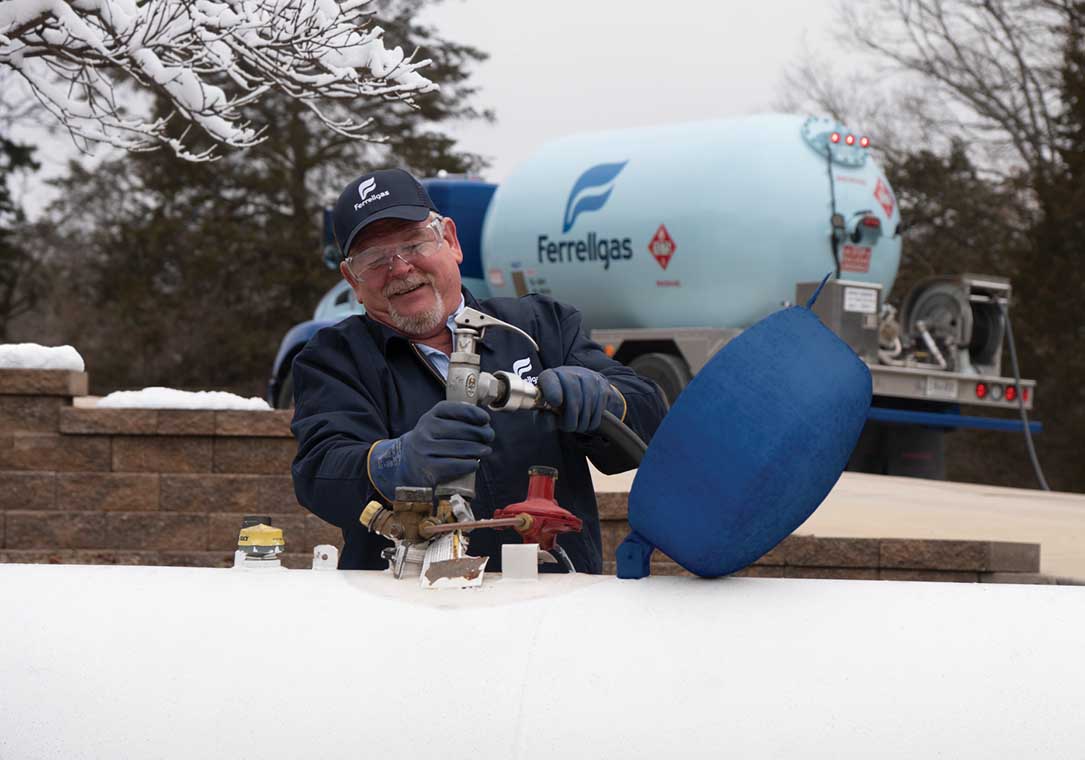
Propane Delivery Options and Refill Scheduling
Ferrellgas offers flexible delivery options to help keep your propane tank ready throughout the season, giving you one less thing to worry about as temperatures drop.
Auto Fill delivery service* removes the guesswork from propane deliveries. Ferrellgas analyzes your household’s propane usage history and local weather data to estimate when you need a fill, then schedules delivery for you automatically. Auto Fill can also be paired with a digital tank monitor* for the most precise delivery planning. While customers using Auto Fill are not required to check their gauge before each delivery, it is still important to check your propane level occasionally, especially during unusually high usage or severe weather.
Will Call delivery service is designed for customers who prefer to order propane on their own schedule. With this option, customers monitor their own gauge and place orders when needed. To support timely delivery, place an order before your tank gets low — around 30% or at least 7 business days before you anticipate needing propane. Otherwise, we may not be able to meet your preferred delivery timing, or you may face additional delivery charges to expedite the order. This is especially important to keep in mind during certain weather conditions, when delivery timeframes may be longer than usual due to circumstances outside our control. For more information, visit our FAQs page.
*Qualification and active credit status are required for Auto Fill service. Availability and cost of digital tank monitors may vary by location.
Rely on Ferrellgas to Fuel Backup Power
Once your generator is ready, keeping it fueled comes down to who is behind your propane supply. As a propane provider built around dependable delivery, Ferrellgas is backed by a nationwide supply network and employee-owners who have a personal stake in getting it right for our customers. That reliability is what keeps your home comfortable and your generator fueled.
Whether you already have a generator or want to explore options for backup power, now is the time to act — not after the first winter storm of the season. If you need propane or have questions about tank sizing and installation, call 888-337-7355 or contact your local Ferrellgas team.
How Propane Fuels Homes
During Winter Storms
CATEGORIES
Archives
- Fall 2026
- Summer 2026
- Spring 2026
- Winter 2025
- Fall 2025
- Summer 2025
- Spring 2025
- Winter 2024
- Fall 2024
- Summer 2024
- Spring 2024
- Winter 2023
- Fall 2023
- Summer 2023
- Spring 2023
- Winter 2022
- Fall 2022
- Summer 2022
- Spring 2022
- Winter 2021
- Fall 2021
- Summer 2021
- Spring 2021
- Winter 2020
- Fall 2020
- Summer 2020
- Spring 2020
- Winter 2019
- Fall 2019
- Summer 2019
- Spring 2019
- Winter 2018
- Fall 2018
- Summer 2018
- Spring 2018
- Winter 2017